Water industry sites are highly hazardous environments, so you must prove that you have a solid understanding of safety before you can pass through the site gates.
Working in the water utilities and treatment sector means dealing with a unique mix of everyday workplace hazards. Whether you are maintaining a clean water treatment plant, working on a wastewater facility, or fixing local pipe networks, your job involves everything from deep underground infrastructure to heavy processing chemicals.
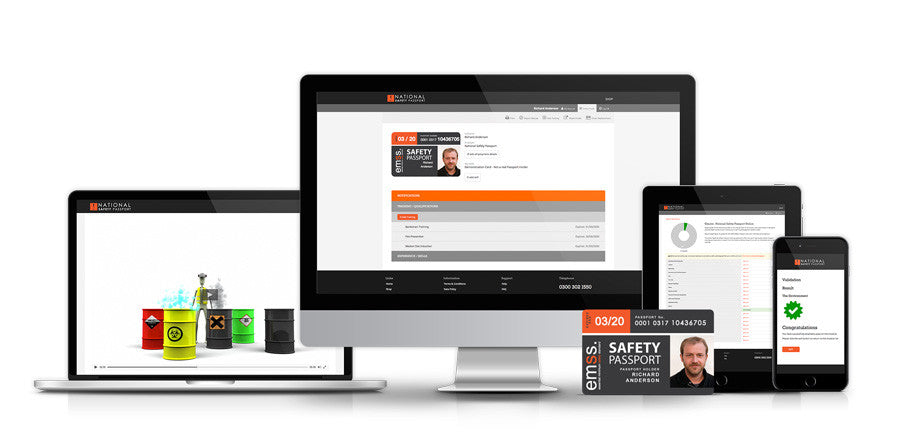
If you are a contractor or an engineer looking to get site-ready, our online National Safety Passport is the perfect foundation to run alongside your technical water industry training courses. It gives you a fast, flexible way to learn essential safety protocols at your own pace, helping you build a risk-aware mindset before you start work on any live utility asset.
£99.60 inc VAT
The Three High-Risk Zones on a Water Site
Unlike a standard industrial workshop, work in the water industry is often categorised by official Source Protection Zones (SPZs). The Environment Agency designs these zones to protect groundwater from contamination, and what you learn on this course gives you the practical knowledge to operate safely inside each boundary:
Zone 1: Inner Protection Zone
This is the highest-risk area immediately surrounding the abstraction point, such as a borehole, well, or spring. It is defined by a strict 50-day travel time for pollutants or a minimum 50-metre radius to protect against microbial contamination. When working in Zone 1, your safety awareness is critical. The course teaches you strict COSHH and environmental protocols to ensure that no tools, fuels, or hazardous cleaning chemicals can accidentally leach into the immediate water supply.
Zone 2: Outer Protection Zone
This larger area is defined by a 400-day travel time from any point below the water table, designed to give pollutants time to naturally decay, dilute, or attenuate before reaching the source. Because Zone 2 covers a wider geographical area, it often involves moving heavy machinery and clearing ground.
What you learn in Safe Use of Vehicles and Excavations ensures you can manage heavy plant and ground works safely without fracturing underground strata or introducing surface contaminants into the wider water table.
Zone 3: Total Catchment
This zone covers the entire land area through which rainfall and groundwater eventually flow to the abstraction point. Although it is farther from the physical wellhead, any major industrial incident here still threatens the long-term water supply.
The training builds a strong Risk Assessment mindset, helping you spot potential hazards across the wider catchment area, such as improper waste storage or unchecked equipment leaks, before they can compromise the integrity of the water source.
Modules Designed for the Water Industry
Rather than forcing you to learn complicated, unnecessary theory, the 21 modules focus entirely on the physical safety rules you need on a live water asset:
-
Excavations & Confined Spaces: Crucial for anyone working near deep storage tanks, sewer pipes, or access chambers. You will learn to spot dangerous atmospheric risks, like toxic hydrogen sulfide gas or a lack of oxygen, before stepping into a confined space.
-
COSHH: Teaches you how to safely handle, store, and work around specialised water-treatment chemicals and raw sludge-thickening agents.
-
The Environment: Water sites face massive scrutiny from the Environment Agency. This module helps you understand how to prevent accidental pollution, chemical leaks, or untreated discharges into local rivers and waterways.
-
Electricity: Covers the essential safety checks you need when working with electrical control panels and heavy pumps in wet, damp environments.
-
Workplace Environment & Welfare: Working with wastewater exposes you to biological hazards, such as harmful bacteria and Weil's disease. This module reinforces the basic hygiene and clean-zone rules needed to look after your health on-site.
-
Permit to Work: Instils strict respect for safety isolation rules, ensuring that heavy machinery or high-pressure valves are completely locked out (Lockout/Tagout) before any maintenance work starts.
For Employers - Simple Management for Utility Teams
If you are an operations director or a site manager, keeping track of safety certifications for a changing mix of engineering contractors, pipe-layers, and maintenance crews can take up a huge amount of time.
Using our straightforward employer dashboard, you can email training tickets directly to your staff and supply chain before they arrive at work. Because our course requires a 100% pass mark across all 21 modules, you get a reliable digital profile proving every single contractor understands essential hazard boundaries.
The system automatically tracks when cards are approaching their three-year expiry, making it incredibly simple to push out renewal notices, reduce the risk of contractor errors, and keep your utility sites fully compliant with UK safety laws.