Unloading, sorting, and processing commercial waste requires an immediate, active understanding of chemical and mechanical risk. Workers mustn’t guess when unknown materials, poorly labelled containers, or volatile substances arrive at a transfer station. Mistakes on the tipping floor lead directly to chemical reactions, fires, and immediate exposure hazards.
The National Safety Passport works alongside speciality training, such as hazardous waste handling training, by providing the essential foundation to help you understand and follow site safety protocols.
This 100% digital course skips generic corporate theory and focuses on the exact hazard-spotting skills needed to safely process mixed waste. Individual operators can complete the 21 modules at their own pace to become site-ready. At the same time, site managers get a foolproof, automated system to verify that every person entering the site understands the strict UK safety boundaries before handling any waste.
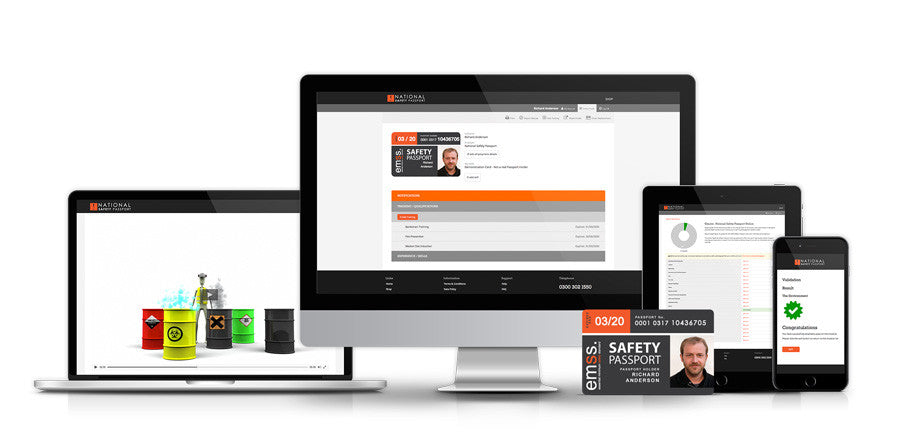
£99.60 inc VAT
Safety Controls Across the Waste Lifecycle
Rather than teaching rigid classroom theories, the National Safety Passport focuses on the physical safety boundaries required at each stage of the waste handling and sorting process.
Phase 1: Material Reception & Sorting Docks
The highest volume of movement happens where delivery vehicles, skips, and heavy plant equipment meet people on foot. While completing the Safe Use of Vehicles and Work Equipment modules, workers learn how to manage traffic safety, respect pedestrian segregation barriers, and perform daily checks on processing machinery such as balers, shredders, and conveyors. This ensures that staff understand how to manage the everyday environment in a live tipping shed safely.
Phase 2: Identification & Chemical Containment
When dealing with commercial or industrial waste, staff are likely to encounter unknown substances, chemical residues, and contaminated materials. The COSHH and Personal Protective Equipment modules teach workers how to correctly identify hazard symbols, handle unknown materials with extreme caution, and select the right protective gear. This knowledge is a vital part of your site's hazardous waste handling training, helping prevent accidental skin exposure or inhalation of toxic dust and fumes.
Phase 3: Processing & Deep Asset Maintenance
Clearing blockages, cleaning sorting hoppers, and maintaining heavy processing plants often requires technicians to work in highly restrictive environments. In the Excavations & Confined Spaces and Working at Height modules, teams are taught how to safely assess deep processing pits, storage silos, and high-level sorting structures. They learn to recognise hidden dangers, such as gas build-up from decomposing organic matter or mechanical crushing risks, before starting any maintenance work.
Vital Modules for Waste & Recycling Teams
The 21 modules inside the safety passport map directly to the strict statutory standards enforced by the HSE and the Environment Agency. Here are some of the most important modules for waste management:
-
The Environment: Waste sites operate under strict Environmental Permits. This module teaches workers how to prevent accidental pollution, contain chemical leaks, and manage runoff water to protect local ecosystems.
-
Fire: Waste piles, batteries, and mixed materials pose a massive, ongoing risk of spontaneous combustion. This module trains staff to spot fire hazards early and understand proper emergency response steps.
-
Noise & Vibration: Processing plants are naturally loud, vibrating environments. Workers learn how to protect their long-term health against the cumulative damage caused by heavy sorting screens and vibrating hand tools.
-
Permit to Work: Instils total respect for mechanical isolations, ensuring that machinery such as industrial shredders or compactors is completely locked out (Lockout/Tagout) before anyone attempts to clear a blockage.
-
Workplace Environment & Welfare: Exposes staff to biological hazards, including vermin-borne diseases (like Weil's disease) and airborne bacteria. This module reinforces the strict hygiene and clean-zone rules needed on a waste site.
For Employers - Eliminating Compliance Gaps on the Tipping Floor
Waste and recycling facilities frequently rely on a fluid mix of permanent sorters, scalehouse staff, and temporary agency drivers. Tracking training paperwork for a high-turnover yard can easily leave dangerous gaps in your compliance records.
Our employer dashboard gives waste operators tight control over site access by moving the entire safety induction process online. You can issue training tickets to temporary crews or incoming contractors before they ever arrive at the yard. Because our system requires a mandatory 100% pass mark across all modules, you get tamper-proof digital evidence that every person on your tipping floor understands critical material risks.
The dashboard automatically monitors the three-year expiry dates on every card, allowing you to prevent costly contractor errors, manage safety renewals effortlessly, and confidently face unannounced HSE site inspections.