Onshore oil, gas and chemical sites, such as refineries, processing plants and storage terminals, are among the most strictly controlled workplaces in the UK because they handle dangerous materials. This means their safety rules are incredibly tight.
Whether you’re an individual contractor trying to get a job on a site, or a business owner managing a team of workers, you’re required to prove your understanding of basic health and safety before you’re legally allowed onto the premises.
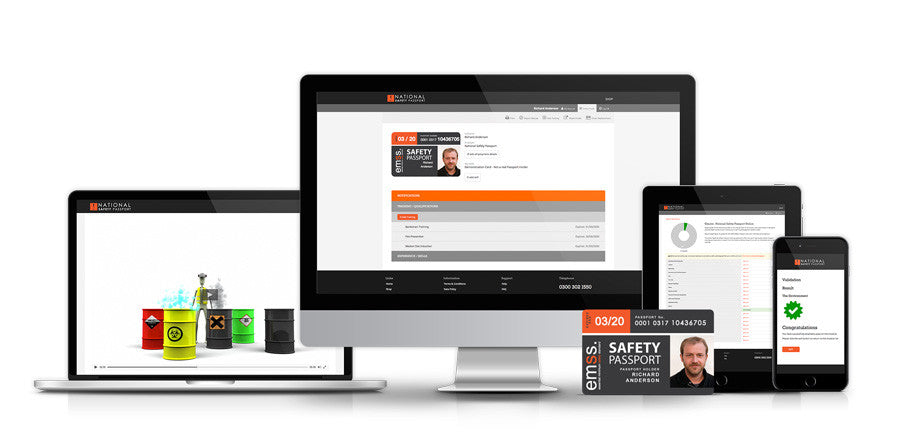
The National Safety Passport makes it easy to get the official Health, Safety and Environment training for oil and gas that you need. Our 100% online course covers everything from working around dangerous chemicals to handling everyday site hazards. It is designed to help workers learn how to stay safe on a busy refinery floor, while giving employers a simple, electronic record proving their team is fully trained and compliant with UK law.
£99.60 inc VAT
Safety & Knowledge Needed for Oil & Gas Sites
Working on downstream oil and gas sites comes with unique risks. To keep incidents to a minimum and comply with UK safety laws, anyone entering a refinery or processing plant needs a solid understanding of these core safety areas.
Chemical & Hazardous Materials for Safety (COSHH)
These types of facilities contain flammable and toxic chemicals, meaning workers must understand how to read safety data sheets, use the appropriate protective gear, and handle dangerous substances safely. Knowing how to prevent a chemical spill or toxic exposure is vital for protecting everyone on site.
High-Risk Operations
Maintenance, engineering and shutdown projects often involve dangerous tasks. Workers must know the basic safety rules for working at heights, handling electrical equipment and the strict procedures required before entering tight, confined spaces.
Safe Systems of Work & Permits
In the oil and gas industry, you can’t start a job without a formal ‘Permit to Work’. The workforce must understand why these permits are issued, how everyday risk assessments keep them safe, and why they have a legal right to stop working if a situation becomes unsafe.
How the National Safety Passport Benefits Workers & Employers
The National Safety Passport addresses the specific, high-stakes risks found across downstream oil, gas, and chemical assets. It ensures individuals are safe on the plant floor and employers remain fully compliant with UK COMAH (Control of Major Accident Hazards) expectations.
For Individual Contractors & Tradespeople
-
Secure Fast Clearance for Refinery Access - Major oil and gas terminal operators require a verified safety passport before letting you past the security gate. Sorting this credential beforehand makes you instantly employable for moneymaking refinery turnarounds and shutdown projects.
-
Master High-Hazard Plant Protocols - The course trains you to work safely around volatile hydrocarbons and toxic processing environments. You will learn how to safely navigate confined spaces and recognise hidden airborne hazards such as industrial dust and gases.
-
Zero Travel, Zero Lost Shifts - Instead of losing a day's pay travelling to a physical test centre, you can complete all modules online in 3 to 4 hours from home, getting you site-ready between contracts without interrupting your income.
For Oil & Gas Site Employers & Subcontractors
-
Verified Audited Compliance - Since the Health & Safety Executive (HSE) heavily scrutinises this sector, you have to be able to prove that your workforce understands strict risk boundaries. Our platform requires a 100% pass mark across all modules, meaning you receive a verified digital certificate confirming your engineers are fully competent.
-
Eliminate Costly Project Downtime - Pulling a team of specialised pipefitters, welders, or scaffolders off a live asset for classroom safety briefings destroys your margins. Our digital system allows your entire crew to complete their training remotely before the site mobilisation date.
-
Centralised Asset Management - Easily manage rolling compliance for hundreds of incoming contractors. From a single dashboard, you can buy tickets in bulk, instantly distribute them to subcontractors via email, and monitor pass rates to ensure your site operations run seamlessly.
Get your Health & Safety Training for Oil & Gas
Maintaining a high standard of health and safety awareness is an ongoing priority across the onshore oil and gas sector. By using the National Safety Passport, individual contractors can quickly secure the credentials they need for their next role. At the same time, employers can easily verify that their teams have a baseline of safety knowledge before working on a live asset.